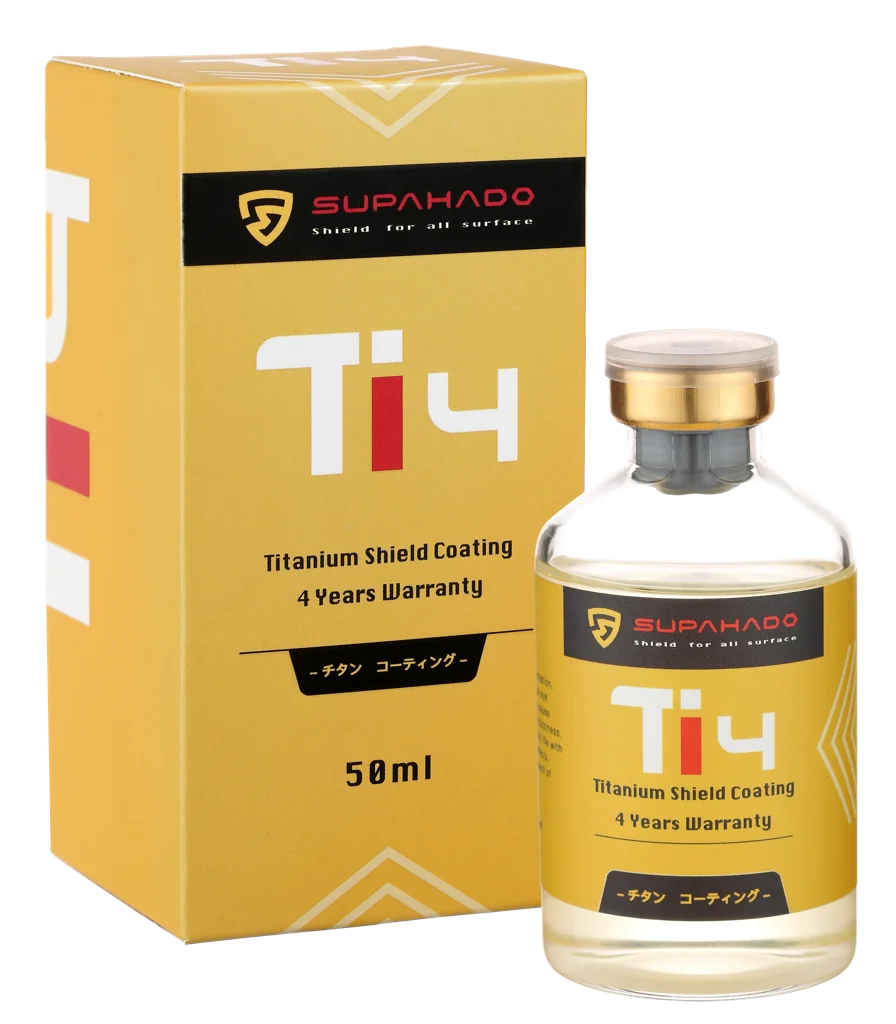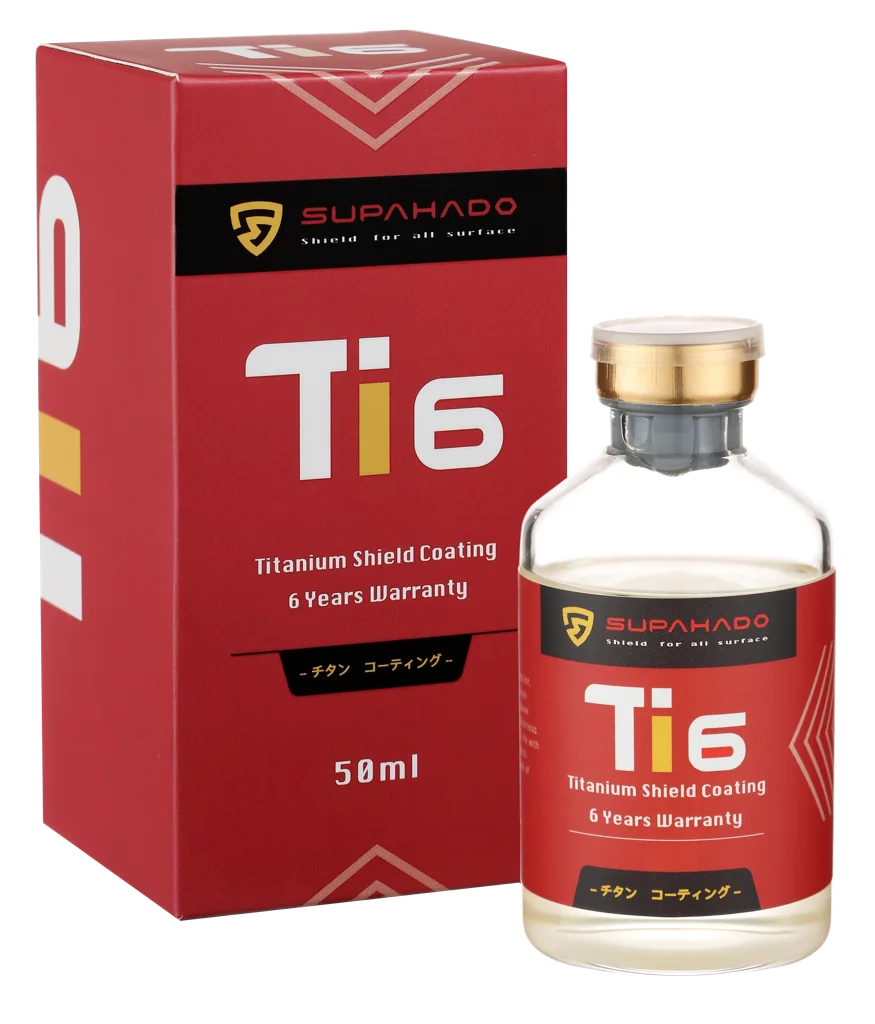
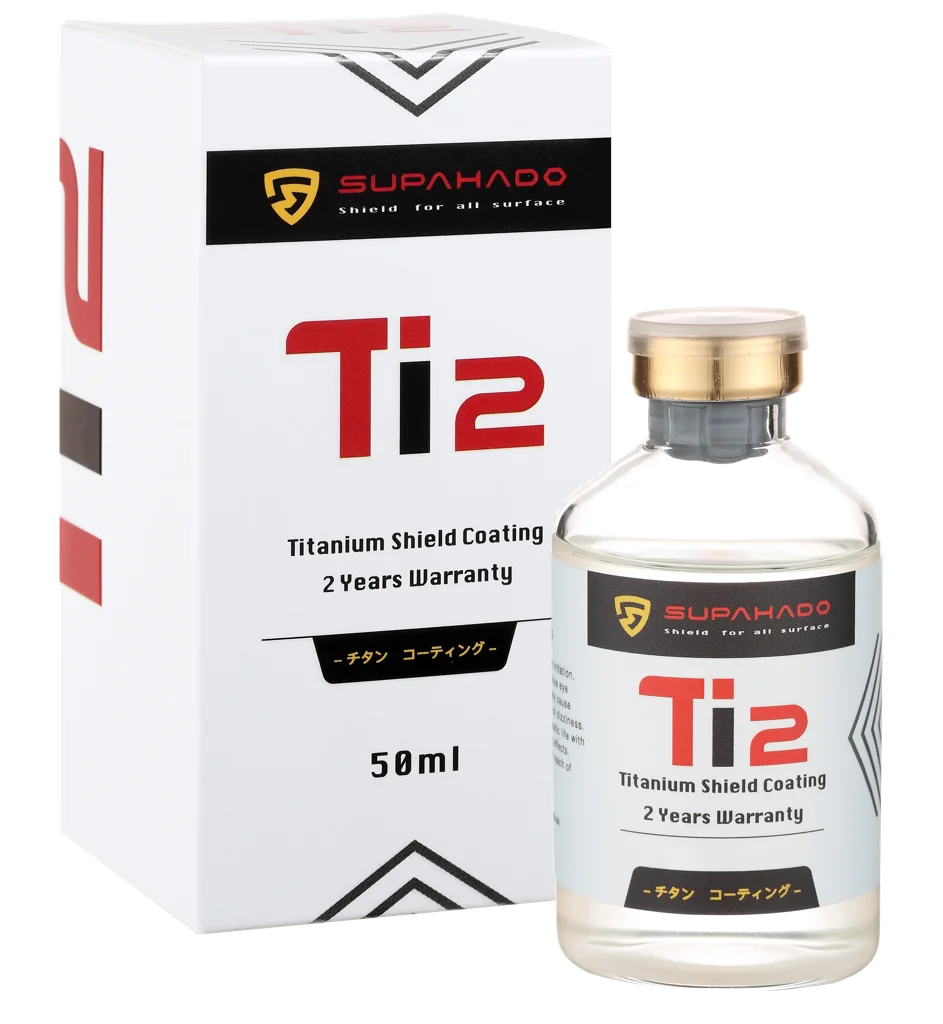
 Tiシリーズ 2年保証
 Car Coating Malaysia: The Complete Guide (2026)
> TL;DR Verdict: Car Coating in Malaysia — 8.5/10 > > - Car coating is one of the smartest investments for Malaysian car owners; our tropical climate destroys unprotected paint 3-4x faster than temperate countries > - Mid-tier ceramic coating (RM1,500-2,000) pays for itself within 3 years compared to regular waxing, paint correction, and resale loss > - Titanium-hybrid coatings add genuine UV absorption on top of standard ceramic protection, which matters when your UV Index hits 15 > > Find a certified SUPAHADO dealer near you
Contents
Why Malaysian Cars Need Coating More Than Most Countries
In a recent Lowyat forum poll, 67% of Malaysian car enthusiasts called ceramic coating a "waste of money." We get it. Between overpriced dealer add-ons, confusing jargon, and wildly inconsistent results, the scepticism is earned. But here is what most of those forum posts miss: Malaysia's climate is among the harshest environments on Earth for automotive paint, and the data backs this up in ways that surprised even us.
Car coating in Malaysia protects your vehicle's paint from UV radiation, acid rain, and tropical humidity using a chemical bond that lasts 3-7 years. Whether you choose ceramic, titanium, or a hybrid approach, the right coating saves Malaysian car owners thousands in paint correction and resale value over a typical 7-9 year ownership period. The tricky part is separating legitimate products from the flood of overpriced dealer add-ons. We will break down exactly how to do that.
UV Radiation: Verified Numbers, Not Marketing
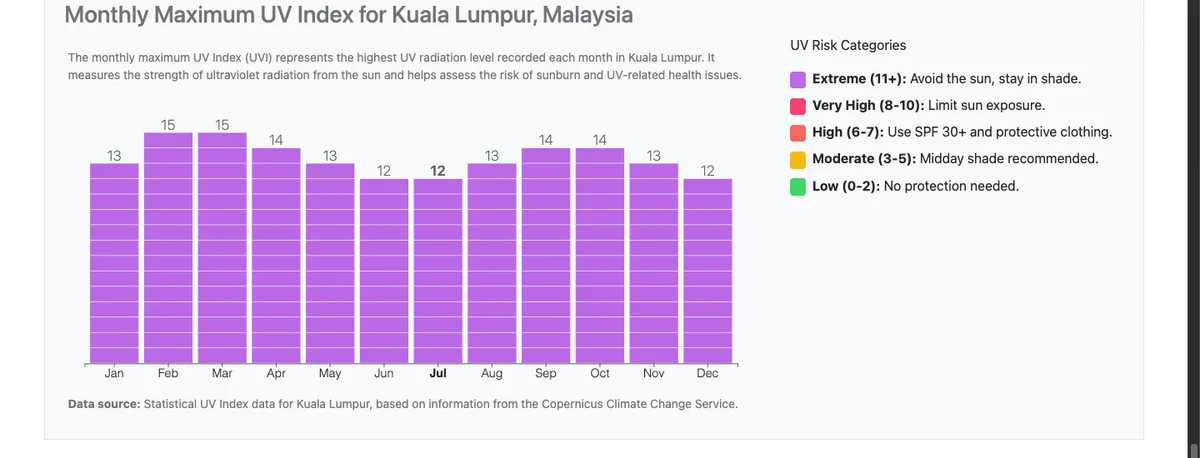
The WHO classifies a UV Index of 11 as "extreme." Kuala Lumpur's UV Index peaks at 13-15 depending on the month, with February and March hitting 15 according to Copernicus Climate Change Service data. Other Malaysian cities like Johor Bahru and Kota Bharu record peaks of 16. That means Malaysian cars sit under extreme UV conditions for most of the year.
So what does that actually do to your paint?
The chart below shows monthly maximum UV Index values for Kuala Lumpur, sourced from the Copernicus Climate Change Service. Every single month exceeds the WHO "extreme" threshold.
!Monthly maximum UV Index for Kuala Lumpur showing peaks of 13-15 year-round Figure: Kuala Lumpur UV Index peaks at 15 in February-March. Every month registers "extreme" (11+) levels. Source: Copernicus Climate Change Service via nomadseason.com
UV radiation breaks down the polymer chains in your clear coat through photo-oxidation. This causes fading, gloss loss, and chalking. A car parked outdoors in KL experiences more UV damage in one year than a car in Tokyo does in three to five. And that is not speculation; it is photochemistry applied to our latitude.
Acid Rain: Peer-Reviewed Data
Here is a number that should concern every car owner in the Klang Valley: a long-term study published in Science of the Total Environment (covering 2000-2014) recorded annual rainwater pH of 4.15 at the Petaling Jaya monitoring station. Neutral water has a pH of 7.0. Because pH is logarithmic, that means KL rain is roughly 700 times more acidic than pure water in terms of hydrogen ion concentration.
When that acidic rain lands on your car and evaporates under the sun, it leaves concentrated acid deposits that etch permanently into the clear coat. Those stubborn water spot marks on neglected cars? That is acid etching. No amount of washing removes it; only machine polishing does, and that strips a thin layer of your finite clear coat each time.
Heat and Humidity: The Accelerators
Car surface temperatures in Malaysian sun routinely reach 60-70 degrees Celsius. Research papers have recorded dashboard temperatures of 69 degrees Celsius in tropical conditions. At these temperatures, carnauba wax softens and loses its protective properties within weeks. So every chemical degradation process accelerates. Oxidation. Contaminant bonding. Clear coat breakdown.
And then there is humidity. KL sits at 73-82% humidity year-round, with annual rainfall of roughly 2,500mm. Compare that to London's 600mm. Your car cycles through wet-dry-wet-dry conditions constantly; each cycle deposits and bonds fresh contaminants to your paint.
What This Adds Up To
Your factory clear coat ages significantly faster here than in a temperate climate. Paint that lasts 10-15 years in Germany shows serious degradation in 3-5 years in Malaysia without protection. Not a sales pitch. Just chemistry.
What Is Car Coating and How Does It Work?
At its core, ceramic coating is liquid glass. The active ingredient is SiO2 (silicon dioxide), the same molecule in actual glass. When applied to your paint, SiO2 nanoparticles form covalent Si-O-Si bonds with the clear coat surface. These are permanent chemical bonds, not a removable layer.
Think of it this way: wax is like cling wrap placed over your paint. It sits on top and eventually peels off. But ceramic coating is more like dyeing fabric. The protection becomes part of the surface itself.
When the coating cures, those nanoparticles crosslink into a dense, glass-like matrix that is:
The hydrophobic effect is where most owners first notice the difference. Water beads tightly and rolls off, carrying dirt with it. So coated cars look cleaner longer and wash in 15-20 minutes. That is not marketing language; it is surface physics.
Types of Car Coating: Ceramic vs Nano vs Glass vs Titanium
Walk into any detailing shop in Petaling Jaya or Subang and you will hear these terms: ceramic, nano, glass, titanium. Most are the same thing with different labels. But one category genuinely is not.
Ceramic Coating (SiO2)
The industry standard. SiO2-based, hardness up to 9H, hydrophobic, chemically resistant. This is what 90% of products on the Malaysian market use. Durability in our tropical climate: 3-5 years with proper maintenance.
Nano Coating
Largely a marketing term. "Nano" just describes particle size, and virtually all modern ceramic coatings use nanoparticles. If someone charges a premium for "nano coating" as a separate product, they are usually selling standard ceramic technology under different branding.
Glass Coating
Popular among Japanese brands. Also SiO2-based. The name comes from SiO2 being the primary component of glass. Some formulations use polysilazane chemistry, but real-world performance is broadly similar to ceramic coatings.
Titanium Coating (SiO2 + TiO2)
This is where the technology genuinely diverges.
Titanium coating adds TiO2 (titanium dioxide) into the SiO2 matrix. A single quarter-micron TiO2 particle absorbs over 99% of solar UV radiation that hits it, according to coatings industry research published in PCI Magazine. In a car coating context, this means the titanium layer actively absorbs UV before it reaches your paint, rather than just forming a hard barrier.
But TiO2 also brings photocatalytic self-cleaning. When exposed to UV light, it produces reactive oxygen species that break down organic contaminants on the surface at the molecular level. Bird droppings, tree sap, insect splatter: the coating actively decomposes them.
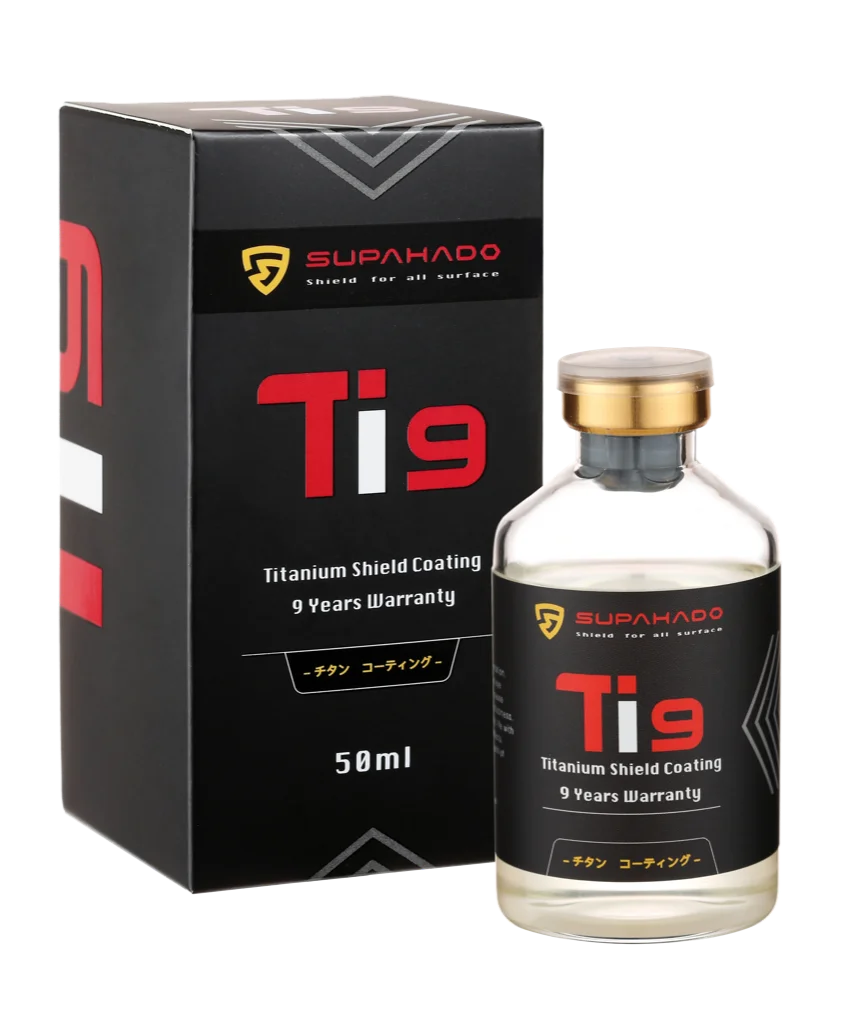
In a country where the UV Index hits 15, that UV-absorbing property is more than theoretical. SUPAHADO's Ti-Series coatings are built on this titanium-hybrid chemistry, combining SiO2 hardness with TiO2 UV protection. The Ti9 achieves 9H hardness with a 7.5nm film thickness and protection rated up to 9 years. We initially expected this to be marketing fluff when we first encountered titanium coatings. The UV absorption data changed our assessment.
Quick Comparison
| Feature | Ceramic (SiO2) | Nano | Glass | Titanium (SiO2 + TiO2) | |---|---|---|---|---| | Base chemistry | SiO2 | SiO2 | SiO2 / Polysilazane | SiO2 + TiO2 | | Hardness | Up to 9H | Up to 9H | Up to 9H | Up to 9H | | Hydrophobic | Yes (100-115 degrees) | Yes | Yes | Yes | | UV protection | Passive barrier | Passive barrier | Passive barrier | Active absorption | | Self-cleaning | Hydrophobic only | Hydrophobic only | Hydrophobic only | Photocatalytic + hydrophobic | | Durability (tropical) | 3-5 years | 3-5 years | 3-5 years | 5-9 years | | Price range (Malaysia) | RM800-3,000 | RM500-2,000 | RM800-3,000 | RM1,500-4,000+ |
The bottom line: "ceramic," "nano," and "glass" are mostly different names for the same SiO2 technology. Titanium coating adds genuine UV absorption and photocatalytic cleaning on top of the SiO2 foundation. Choose based on performance data, not branding.
Car Coating vs PPF vs Wax: Which Do You Need?
This question fills entire Lowyat threads. The screenshot below shows a typical debate among Malaysian car owners weighing their options.
!Lowyat forum thread where Malaysian car owners debate ceramic coating worth Figure: A Lowyat forum thread debating ceramic coating vs PPF vs regular waxing. The divided opinions reflect real-world frustrations with inconsistent quality.
For a dedicated deep-dive, see our ceramic coating vs PPF vs wax comparison. Here is the honest summary.
Paint Protection Film (PPF)
PPF is thick, transparent polyurethane film physically applied over your paint. It is the only option that protects against physical impact: stone chips, key scratches, shopping trolley dings.
The simple distinction: ceramic coating protects against what lands on your paint (chemicals, UV, contaminants). PPF protects against what hits your paint (rocks, debris, physical contact). Different threats, different solutions.
Wax and Sealant in Malaysia
Here is the problem with wax in our climate. Carnauba wax melts at approximately 82 degrees Celsius. Malaysian car surfaces routinely hit 60-75 degrees. At those temperatures, wax softens and loses protective properties within weeks. A coat that lasts 2-4 months in the UK survives only 4-6 weeks here. Synthetic sealants hold up somewhat better but still degrade far faster in tropical conditions.
One Lowyat user summed it up after spending RM300 on a budget coating: beading performance faded within 3-4 months. Worth every ringgit? Barely. Yet still better than the RM80 wax job that melted off in three weeks.
The Honest Comparison
| Feature | Wax / Sealant | Ceramic Coating | PPF | |---|---|---|---| | Protection type | Chemical barrier (temporary) | Chemical bond (semi-permanent) | Physical barrier (permanent) | | UV protection | Minimal | Moderate to high | High | | Chemical resistance | Low | High | High | | Scratch protection | None | Minor (resists light marring) | High (absorbs impact) | | Stone chip protection | None | None | Yes | | Durability in Malaysia | 4-6 weeks | 3-7 years | 5-10 years | | Cost | RM50-200 per application | RM1,500-4,000 (one-time) | RM3,000-15,000+ | | Maintenance | Reapply monthly | Annual inspection | Minimal | | Best for | Budget / short-term | Daily drivers / long-term | High-value / highway cars |
So Which Do You Need?
If the UV and acid rain data we covered earlier concerned you, coating is the practical answer. Find a SUPAHADO dealer near you to discuss which level of protection fits your car and budget.
How Much Does Car Coating Cost in Malaysia?
Real numbers. No hedging. For a full breakdown with provider-level pricing, see our car coating price guide for Malaysia.
Budget Tier: RM299-899
Consumer-grade coatings applied by general car wash shops. Lower SiO2 concentration (50-70%), minimal paint preparation, 6-12 months real durability in Malaysian conditions.
Who is this for? Owners of budget cars like the Perodua Axia or Bezza who want basic protection without significant investment. At this tier, you are getting a better sealant. Results will be inconsistent without proper paint prep.
Red flag: Under RM300 for a "ceramic coating" should raise questions. Product cost alone for a legitimate coating is RM100-300, before labour and overhead.
Mid Tier: RM1,000-2,000
The sweet spot. Professional-grade coatings (80-95% SiO2), single-stage paint correction, controlled environment application, 2-5 year durability, and a warranty. This is where the maths starts working in your favour.
Who is this for? If you drive a Myvi, City, or Vios and plan to keep it for several years, this tier makes strong financial sense. The Perodua Myvi sold 72,724 units in 2025 alone; it is Malaysia's third most popular car, and protecting that paint extends its already strong resale value.
Premium Tier: RM2,000-4,000+
Top-tier products with multi-stage paint correction, multi-layer application, and 5-9 year durability. Climate-controlled studio, comprehensive warranty, and a maintenance programme.
Who is this for? Higher-value cars (Civic, Camry and above), enthusiasts, and anyone who wants maximum protection.
What Drives the Price?
1. Product quality: Trade prices range from RM100-500+ per bottle. Cheap products mean cheap results. 2. Paint correction: The biggest labour cost. Proper correction takes 4-12 hours. Shops that skip it quote lower. 3. Number of layers: More layers means more product and curing time. 4. Facility: Filtered air and controlled temperature cost more than an open-air bay. 5. Car size: A Perodua Bezza costs 20-40% less to coat than a Toyota Fortuner. 6. Technician skill: Coating application is a craft. Experience produces better results.
The Real Cost of "Cheap"
Malaysia recorded 820,752 new car registrations in 2025, the second consecutive record year. The explosion in demand has attracted operators offering rock-bottom prices. Be cautious. A poorly applied coating locks in defects and contamination under a hard layer that is extremely difficult to remove. Worse than no coating at all.
Is Ceramic Coating Worth It?
This question starts arguments in every Malaysian car group. We will address it with maths, not opinions.
The "Just Respray Later" Argument
The most common objection, especially on Lowyat: "For a few thousand ringgit you can just respray." Let us run the numbers.
Scenario: Perodua Myvi owner, 7-year ownership
Without coating:
With mid-tier ceramic coating:
The difference: RM5,000-8,000 saved over 7 years. Not always, and not for every owner. But for the 100,488 Bezza buyers and 72,724 Myvi buyers in 2025, many of whom will keep their cars for a full loan term, the numbers favour coating. And these are conservative estimates.
The Honest Framework
Coating is almost certainly worth it if:
Coating may not be worth it if:
Coating is definitely not worth it if:
Addressing the Sceptics
If you are in the 67% who think coating is wasteful, we respect that position. It comes from real experiences: people who overpaid, got poor results, or were sold unrealistic expectations. But the problem is rarely the technology itself. It is misleading marketing and inconsistent application quality.
We are not here to convince you that you must coat your car. We are here to make sure that if you do decide, you know exactly what you are paying for and what to expect. Honestly, the scepticism has made us better at presenting the data rather than the hype.
How to Choose a Coating Provider
This section matters more than the product section. A skilled technician with a good product will outperform a mediocre technician with a premium product. Every single time. And yet most buyers spend all their research time comparing products and almost none comparing applicators.
Green Flags
Red Flags
The Dealer Add-On Problem
This needs to be said directly: many dealer-applied coatings are not what they claim.
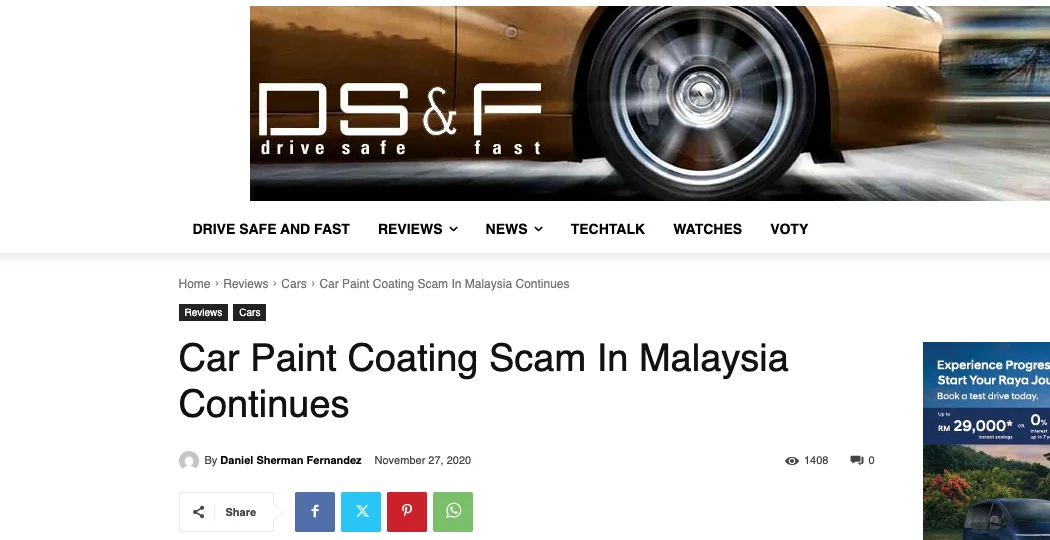
DSF.my has documented this issue extensively, as shown in their investigation below.
!DSF.my article titled Car Paint Coating Scam In Malaysia Continues Figure: DSF.my's coverage of the car paint coating scam problem in Malaysia. The article documents how consumers are misled by sub-standard applications.
Lowyat threads are also filled with stories of dealer "ceramic coatings" that wash off within weeks. The typical pattern: a dealer charges RM2,000-5,000 during purchase, applies a basic sealant in minutes (not hours), and provides no meaningful warranty. We have personally seen quotes from dealers offering "ceramic coating" that took less time than a proper car wash.
Some dealers do partner with legitimate providers. But before accepting a dealer coating add-on, demand answers: What specific product? Who applies it and what are their certifications? Is full paint correction included? What exactly does the warranty cover? Can you inspect the application facility?
If they cannot answer clearly, get your coating done independently after delivery. You will likely pay less for better work. Or at the very least, you will know exactly what you are getting.
What 9H Hardness Actually Means
You will see "9H" on almost every coating product in Malaysia. Here is what it actually means and does not mean.
The ASTM D3363 Pencil Test
The "H" refers to the ASTM D3363 standard. Pencils of increasing hardness (6B to 9H) are dragged across the surface at a fixed angle and pressure. The rating shows the hardest pencil the surface resists without scratching. 9H is the maximum on this scale. Full stop.
What 9H Protects Against
What 9H Does NOT Protect Against
The "10H" Myth
The ASTM D3363 scale maxes out at 9H. So any "10H" claim either references the Mohs mineral hardness scale (a completely different test designed for rocks, not coatings) or is fabricated. We have seen several Malaysian brands advertising 10H; it is either a misunderstanding or deliberate misdirection.
Honest about limitations. That is what builds trust. Coating technology is genuinely impressive. It does not need exaggerated claims to sell.
How to Maintain Your Coating
Coating is not "apply and forget." But maintaining a coated car is dramatically easier than an uncoated one. And honestly? That ease of maintenance is what converts most sceptics after they experience it firsthand.
The Basic Rules
1. Wait before washing. At least 7 days after application for full curing. 2. Use pH-neutral shampoo. Harsh detergents strip coating over time. Stick to pH 6-8 products. 3. Two-bucket method. One bucket soapy, one for rinsing your mitt. This prevents rubbing trapped dirt into the surface. 4. Skip automatic car washes. Spinning brushes degrade coating and scratch through it. Hand wash or touchless only. 5. Dry properly. Microfibre drying towel or filtered air blower. Do not air-dry in Malaysian water; the mineral deposits create spots. 6. Remove contaminants fast. Bird droppings and tree sap bond more aggressively in our heat.
Maintenance Schedule
| Timeframe | Action | |---|---| | Weekly | Quick rinse or waterless wash for surface dust | | Every 2-4 weeks | Full hand wash with pH-neutral shampoo | | Every 3-6 months | Decontamination wash (iron remover + clay bar if needed) | | Annually | Professional inspection and maintenance top-up | | Year 3-5 | Evaluate hydrophobic performance; consider recoat |
Boosting Between Visits
SiO2-based spray sealants ("coating boosters" or "toppers") refresh the hydrophobic layer between professional maintenance. They are easy to apply during regular washing, and they can extend the interval between full recoats by 6-12 months. Not a replacement for professional maintenance, but a solid bridge between visits.
Who Is This Best For?
Daily drivers who park outdoors. If your Myvi, Bezza, City, or Vios sits in an uncovered car park 5 days a week, coating is the single most effective paint protection investment. UV and acid rain do their worst damage to outdoor-parked cars.
New car buyers. Coating on day one locks in factory paint condition. This is the cheapest time to coat because no paint correction is needed. See our guide on new car paint protection in Malaysia for the full walkthrough.
Enthusiasts and resale-conscious owners. If you keep your car clean and care about condition at trade-in time, coating preserves gloss and depth that directly translates to resale value.
Higher-end vehicle owners. The absolute cost of coating is a smaller percentage of the car's value, and the resale impact is proportionally larger. A Civic or Camry with pristine paint at year 5 commands a meaningful premium.
Who should look elsewhere: If you are selling the car within 12 months, if you genuinely do not care about paint appearance, or if you need protection against stone chips and physical damage specifically, PPF is what you need rather than coating.
How to Get Started
Step 1: Assess Your Paint Condition
If your car is brand new or recently purchased, you are in the best position. No correction needed; coating can go directly over factory paint. If the car is older or has visible swirl marks, water spots, or oxidation, paint correction must happen first. Budget RM800-1,500 for correction on top of coating cost.
Step 2: Research Providers in Your Area
Use the green flags and red flags from earlier in this guide. Look at their social media for real before-and-after work. Ask specifically what product they use and whether paint correction is included. And get at least two quotes; compare what is included, not just the bottom-line price.
Step 3: Choose Your Protection Level
Match your budget and ownership plans to a tier. Mid-tier (RM1,500-2,000) works for most Malaysian car owners. Premium tier makes sense for higher-value vehicles or 7+ year ownership. SUPAHADO's Ti9 titanium coating sits at the premium tier, offering up to 9 years of protection with active UV absorption.
Step 4: Book and Prepare
Most quality installers need a booking 1-2 weeks out. Before your appointment: do not polish or wax the car (they need to see the raw paint condition), give it a basic wash, and remove personal items. The car will be in the studio for 1-3 days depending on the package. Yes, days. Quality takes time.
Step 5: Follow the Aftercare Plan
Your installer should provide a written aftercare guide. The critical rule: no washing for 7 days after application. After that, follow the maintenance schedule in this guide. Book your first annual maintenance at the same time as coating to lock in the habit.
Ready to protect your car? Find a certified SUPAHADO dealer near you to discuss options for your specific vehicle.
FAQ
How long does ceramic coating last in Malaysia?
Professional-grade ceramic coating lasts 3-5 years in Malaysian conditions. Titanium-hybrid coatings like SUPAHADO's Ti9 are rated for up to 9 years. These numbers are shorter than what manufacturers quote because their testing typically happens in temperate climates. Our UV, heat, and humidity accelerate degradation.
How much does car coating cost in Malaysia?
Budget coatings start around RM300-500 but last only 6-12 months. Mid-tier professional coating runs RM1,500-2,000 for a sedan. Premium packages with multi-stage paint correction cost RM2,000-4,000+. See our detailed car coating price guide for specific provider pricing.
Is car coating worth it for a new car in Malaysia?
Yes, and it is actually the best time to coat. New paint needs no correction, which saves RM800-1,500 and produces the best possible result. The cost per year of protection is lowest when you coat on day one.
Can I apply ceramic coating myself?
DIY coatings exist and can produce decent results if you prepare the surface properly. But mistakes (high spots, uneven coverage, coating over contamination) are costly to fix. For most people, professional application is worth the premium. If you do go DIY, choose a forgiving product designed for consumer use, not a professional-grade coating.
Does ceramic coating prevent scratches?
It reduces light scratches and swirl marks. It will not stop key scratches, stone chips, or heavy contact. 9H hardness resists pencil-grade abrasion, not metal or rock impact. If scratch protection is your primary concern, PPF is the right product.
What is the difference between ceramic coating and PPF?
Ceramic coating forms a chemical bond on your paint that protects against UV, chemicals, and contaminants. PPF is a physical film that absorbs impacts and prevents stone chips. They protect against different threats and work well together: PPF on high-impact areas, coating on the rest. Read our full ceramic coating vs PPF vs wax comparison.
How do I know if my coating is still working?
Test the hydrophobic effect. Pour water on a coated panel. If it beads tightly and rolls off, the coating is performing. If water sheets and sits flat, the hydrophobic layer has degraded and you should schedule a professional inspection. Most quality coatings include annual check-ups.
Is 9H the best ceramic coating hardness?
9H is the maximum on the ASTM D3363 pencil hardness scale. Any claim above 9H (like "10H") either uses a different measurement system or is not credible. Hardness alone does not determine coating quality; chemical resistance, hydrophobic durability, UV protection, and film thickness all matter.
Conclusion
Malaysia's combination of extreme UV (peaking at 15 on the index), acidic rain (pH 4.15 in the Klang Valley), 73-82% humidity, and 60-70 degree surface temperatures creates one of the most demanding environments for car paint anywhere on Earth. The science is clear: unprotected paint degrades 3-4 times faster here than in temperate climates.
Car coating is the most practical long-term answer. Mid-tier ceramic coating pays for itself within 3 years for a typical Malaysian car owner. Titanium-hybrid coatings add active UV absorption that is particularly relevant at our latitude. And the 7-year total cost comparison favours coating by RM5,000-8,000 over the wax-and-respray approach.
The key is choosing the right product applied by the right technician. Use the green flags and red flags in this guide. Get quotes. Ask hard questions.
Looking for a certified SUPAHADO dealer near you? Our dealer map shows every trained installer in Malaysia with contact details and services offered. If you have questions this guide did not cover, reach out to us directly.
This guide is maintained by the SUPAHADO team and updated regularly to reflect current pricing, products, and market conditions. Last verified: April 2026.