
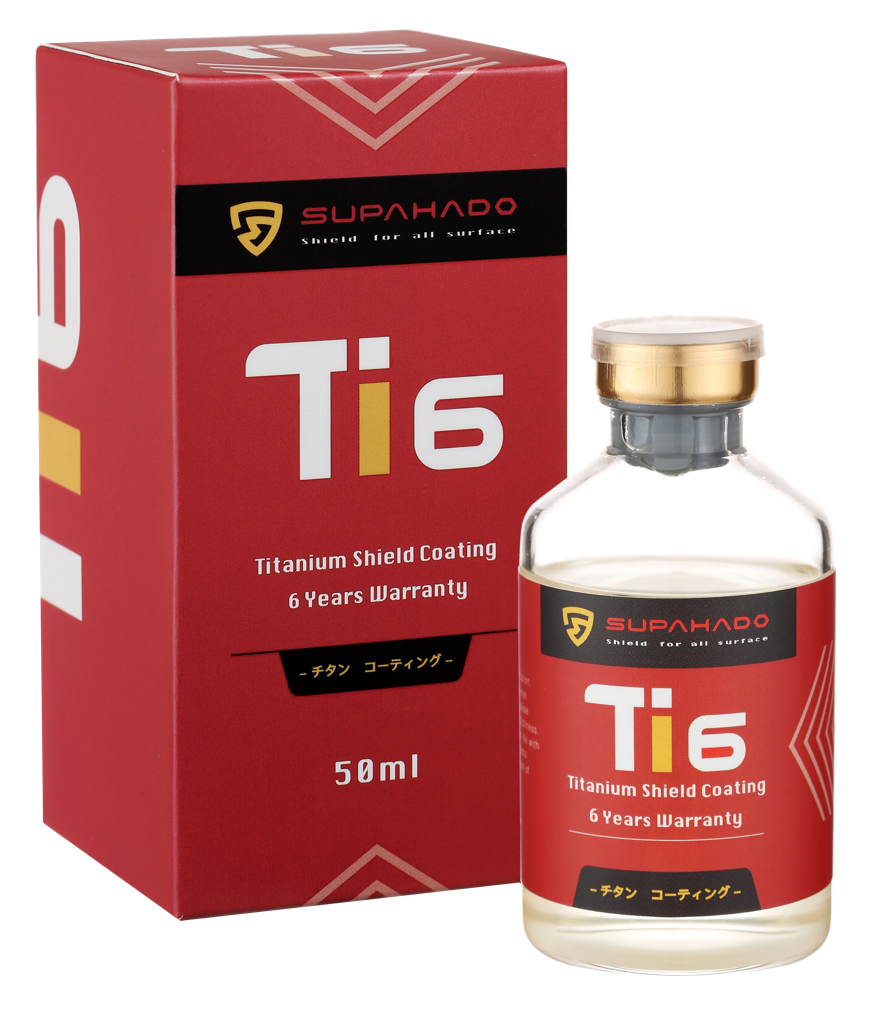
 Ti Series 6yr Protection
Back to News
product knowledge
What Is Ceramic Coating? Everything You Need to Know
SUPAHADO Team · · 11 min read
You have probably heard the term thrown around at detailing shops or seen it listed as an upgrade when buying a new car. But most explanations either skip the science entirely or drown you in jargon. This article does neither.
Here is a plain-English breakdown of what ceramic coating actually is, how it bonds to your paint at the molecular level, what "9H hardness" really means, and — just as importantly — what it cannot protect against. By the end, you will know more about ceramic coating than most people who sell it.
For a broader look at all your protection options, start with our complete car coating guide.
The Simple Version: Liquid Glass for Your Car
Before we get into molecules, here is the one-line version: ceramic coating is liquid glass that you apply to your car's paint.
Pour it on, spread it thin, let it cure — and what you are left with is a hard, glass-like layer that is chemically bonded to the surface below. Not sitting on top. Not a film you can peel. Bonded, at the molecular level, in a way that water, soap, and normal washing cannot touch.
That is the analogy. Now here is what is actually happening.
The Science: How Ceramic Coating Bonds to Your Paint
Ceramic coating is a liquid polymer solution carrying SiO2 nanoparticles — silicon dioxide. If that sounds familiar, it should: SiO2 is the same molecule that makes up glass and quartz. You are, quite literally, applying microscopic glass particles to your paint.
But nanoparticles alone are just dust. What makes ceramic coating work is the bonding chemistry.
The coating contains silane coupling agents — molecules engineered to connect two very different surfaces. Think of silane as a molecular bridge: one end grabs onto the SiO2 particles, the other end grabs onto your paint's clear coat. When the coating is applied and begins to cure, these silanes initiate something called siloxane bonding, forming Si-O-Si covalent bonds between the coating and the paint surface.
Covalent bonds are strong. They are the same type of bond that holds water molecules together, that builds DNA, that makes diamond hard. Hydrogen bonds and Van der Waals forces — what holds wax to paint — are a fraction of that strength.
At the same time, the coating undergoes cross-linking: the resin chains in the formula link together, trapping the ceramic nanoparticles inside a three-dimensional molecular network. The result is a semi-permanent glass-like matrix that is part of your paint, not a layer sitting on top of it.
This is why ceramic coating cannot be washed off. Soap and water do not break covalent bonds. The coating degrades slowly over years through UV radiation and oxidation — the same processes that eventually weather glass — but it will not rinse away.
What Makes It Hydrophobic
Once the ceramic matrix is in place, water behaves very differently on the surface.
To understand why, you need one concept: contact angle. When a water droplet lands on a surface, it either spreads flat or balls up. The angle between the droplet and the surface — measured at the point of contact — is the contact angle. A flat puddle has a low contact angle. A tight bead has a high one.
On uncoated paint, the contact angle is roughly 40 to 70 degrees. Water spreads, clings, and leaves mineral deposits as it evaporates. On a properly ceramic-coated surface, that angle jumps to 100 to 115 degrees. Water forms tight beads that roll off, carrying dirt and contaminants with them.
Why the change? The ceramic matrix has very low surface energy. Water molecules are more attracted to each other than they are to the coating, so they pull themselves into a tight ball rather than spreading. It is the same reason water beads on a freshly waxed surface — just far more extreme and far more durable.
The theoretical limit of this effect is a contact angle above 150 degrees, called superhydrophobicity, famously seen on lotus leaves. Standard ceramic coatings land below that threshold, but the practical result — water sheeting off a moving car, debris not sticking, surfaces that stay cleaner longer — is dramatic and real.
What 9H Hardness Really Means (And What It Doesn't)
"9H hardness" appears in almost every ceramic coating advertisement. Here is what it actually means.
The H in 9H refers to pencil hardness — a standardised scale used to measure the hardness of coatings, defined by the ASTM D3363 standard. The scale runs from 9B (the softest) through B, HB, F, H, 2H, 3H, all the way to 9H. Nineteen grades in total. 9H is the maximum on the official scale.
The test is straightforward: a pencil is pushed across the coated surface at a 45-degree angle under constant force. The rating is the hardest pencil that leaves no mark. A high rating means the coating resists scratching from hard objects.
For context: bare clear coat on most cars rates between 4H and 5H. A human fingernail sits around 2H to 3H. A 9H ceramic coating is measurably harder than the clear coat it protects — which means fine scratches, swirl marks from light contact, and marring from dust wiping are resisted at a level your bare paint simply cannot match.
But here is the honest part: 9H does not mean scratch-proof.
The pencil hardness scale measures resistance to fine surface abrasion. It says nothing about impact resistance. A stone chip travelling at highway speed, a key dragged deliberately across the panel, a deep scratch — none of these are stopped by coating hardness. If you have seen "ceramic coating" marketed as scratch-proof or chip-proof, that is not accurate.
One more thing: you may see some products marketed as "10H." There is no 10H on the ASTM D3363 scale. It does not exist. It is a marketing invention.
Titanium vs Standard Ceramic: Why TiO2 Changes Things
Standard ceramic coatings are built primarily on SiO2. They deliver the hardness, the chemical resistance, and the hydrophobic effect described above. They are excellent.
But there is a meaningful upgrade: adding TiO2 — titanium dioxide — nanoparticles to the SiO2 matrix.
TiO2 does two things SiO2 cannot.
First, it absorbs UV photons and converts them into harmless heat. This protects the clear coat and paint beneath from the UV degradation that causes oxidation, fading, and that chalky, dull appearance common in cars left outdoors for years. SiO2 alone offers some UV shielding by virtue of the coating sitting over the paint; TiO2 actively intercepts the radiation.
Second, TiO2 is photocatalytic. When UV light strikes TiO2 nanoparticles, they generate reactive oxygen species — highly energetic molecules that break down organic contaminants at the molecular level. Bird droppings, tree sap, pollen, insect acids: these are organic materials. A TiO2-enhanced coating can begin degrading them on contact with sunlight, reducing the risk of etching into the clear coat if you cannot wash the car immediately.
This is the technology behind SUPAHADO's ceramic coatings. The TiO2 nanoparticles are 7.5 nanometres in size — roughly 10,000 times smaller than a single human hair. At that scale, the particles are completely transparent to visible light (you will not see any haze or colour shift) while remaining highly effective at absorbing UV wavelengths. SUPAHADO's formulation also uses a supramolecular structure, where the molecules self-assemble into ordered arrangements via hydrogen bonding during curing, producing a more uniform and consistent coverage across the entire surface.
What Ceramic Coating Protects Against — And What It Doesn't
Let's be direct on this, because the marketing often is not.
Ceramic coating does protect against:
Ceramic coating does not protect against:
If stone chip protection is your primary concern, paint protection film (PPF) is the appropriate solution — it is a thick, impact-absorbing layer that ceramic coating is not. The two are often used together, with PPF on high-impact zones and ceramic coating applied over the entire vehicle for chemical and UV protection. See our comparison of ceramic vs PPF vs wax for a full breakdown.
How Long Does Ceramic Coating Last?
Durability varies based on coating grade, application quality, climate, and maintenance habits.
A consumer-grade ceramic coating applied by an enthusiast at home might last one to two years. A professionally applied multi-layer coating from a reputable brand is typically rated for three to five years, with premium grades warranting up to five to nine years. For a full breakdown of what each price tier delivers in Malaysia, see our car coating price guide.
Climate matters significantly. Ceramic coatings degrade primarily through UV exposure and oxidation. In tropical climates like Malaysia — intense sun year-round, frequent rain, high humidity — a coating is working harder than it would in a temperate region with mild summers and months of low UV in winter. This means realistic lifespan in a tropical environment tends to sit toward the lower end of the manufacturer's rated range.
Maintenance also plays a major role. Ceramic coating is not maintenance-free. Regular washing with pH-neutral shampoo, avoiding abrasive detergents, and periodic ceramic boost spray applications between full recoats will preserve the hydrophobic performance and extend the coating's effective life significantly.
Common Myths Debunked
Myth 1: Ceramic coating makes your car self-cleaning. The hydrophobic effect means water sheets off and carries loose debris with it, and TiO2 coatings can break down organic contaminants. But the car still gets dirty. You still need to wash it. "Easier to clean" is accurate; "self-cleaning" is an oversell.
Myth 2: Ceramic coating is permanent. It is semi-permanent. The covalent bonding means it will not wash off, but it does slowly degrade through UV exposure and oxidation over several years. It will eventually need to be removed and reapplied.
Myth 3: 9H means scratch-proof. As covered above: 9H is the maximum on the pencil hardness scale and represents genuine hardness. It does not prevent stone chips, key scratches, or deep abrasion. High scratch resistance and scratch-proof are not the same thing.
Myth 4: You can apply ceramic coating yourself to the same standard as a professional. Consumer-grade products are available and can deliver good results. But professional installation involves paint correction (removing existing swirls and defects before coating), controlled environment application, and layered builds that are very difficult to replicate at home. What is encapsulated under the coating stays there — imperfections included.
Myth 5: Thicker is always better. Ceramic coating performance comes from chemistry, not layer thickness. Applying excessive product can lead to uneven curing, high spots, and rainbow-effect streaking. Professional application follows precise, thin-layer protocols that deliver consistent results.
The Bottom Line
Ceramic coating is one of the most effective and durable surface protection technologies available for vehicles. When it is the right product and applied correctly, the results are genuine: harder surface, chemical resistance, hydrophobic water behaviour, and significantly reduced UV degradation. The science behind it — covalent siloxane bonding, cross-linked nanoparticle networks — is solid.
The key is matching your expectations to what the technology actually delivers. It is not a force field. It will not stop a stone chip. It will not eliminate washing. What it will do is protect your paint's clear coat from the slow, invisible damage of UV, acid, and chemical exposure — the damage that causes most cars to look old and dull long before the paint actually chips.
Ready to go deeper? Read our complete car coating guide for a full breakdown of every protection option available, or find a SUPAHADO dealer near you for a professional assessment of what your car needs.
Related Products
Ti Series 6yr Protection 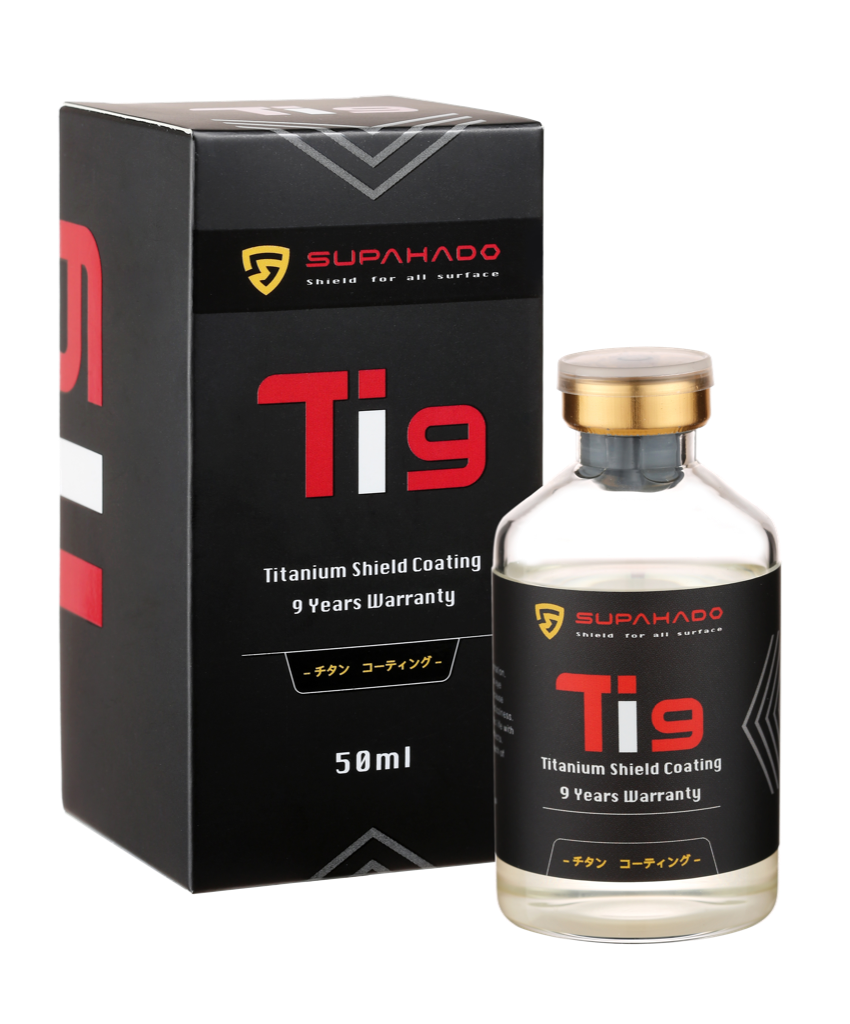 Ti Series 9yr Protection