
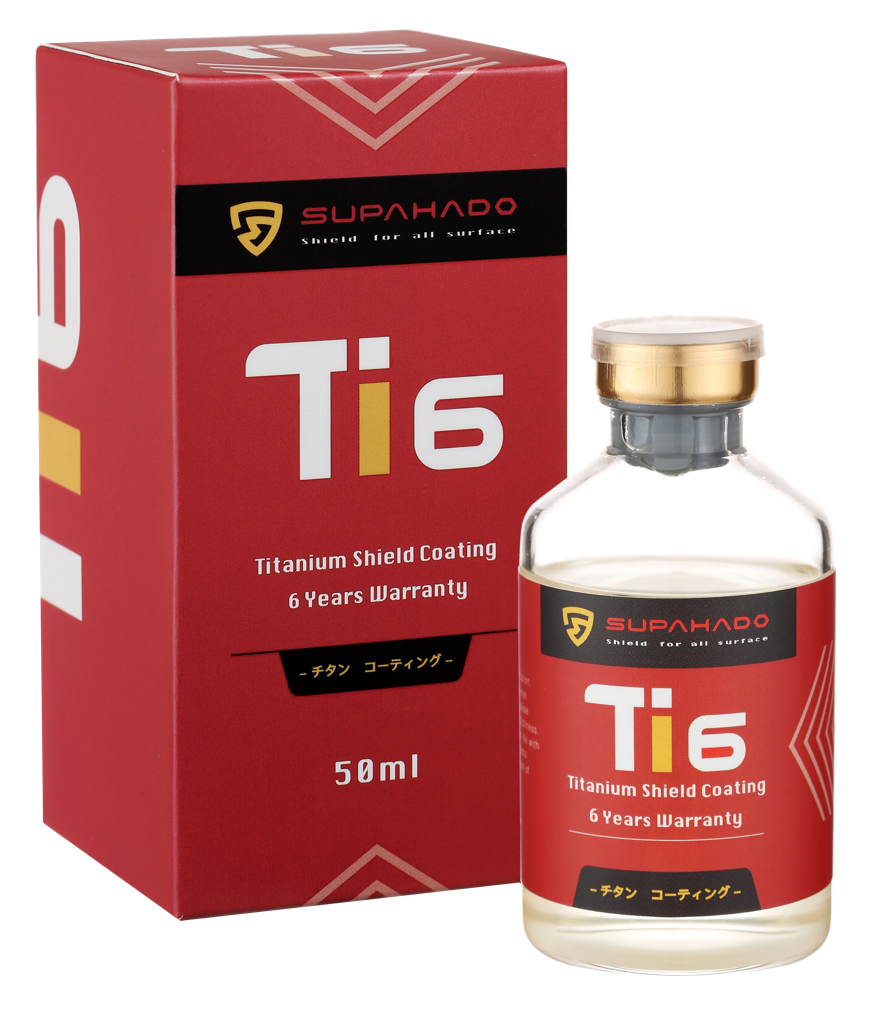
 Tiシリーズ 6年保証
ニュース一覧に戻る
guides
Ceramic Coating vs PPF vs Wax: Which One Does Your Car Need?
SUPAHADO Team · · 13分で読める
Three questions come up more than any other when Malaysian car owners start thinking about paint protection. "Is ceramic coating actually worth it?" "Do I need PPF or will wax do?" "What's the difference anyway?"
This guide gives you a straight answer to all three — without pushing any single product. Each option has genuine strengths and real limitations. Your best choice depends on your budget, your car, how you drive, and where you park. By the end of this article you'll know exactly what that choice is.
For a deeper look at how coating chemistry works, read our complete car coating guide.
Quick Comparison: All Four Options Side by Side
| | Wax | Sealant | Ceramic Coating | PPF | |---|---|---|---|---| | How it bonds | Physical (sits on surface) | Semi-chemical | Covalent chemical bond | Mechanical adhesion | | Durability (Malaysia) | 4–6 weeks | 6–9 months | 3–7 years | 5–10 years | | UV protection | Minimal | Moderate | Excellent | Good | | Chemical resistance | None | Low | Excellent | Moderate | | Acid rain resistance | None | Low | Excellent | Moderate | | Stone chip protection | None | None | None | Excellent | | Scratch resistance | None | Minimal | Minor scratches only | Excellent (self-healing on premium films) | | Hydrophobic effect | Moderate | Moderate | Excellent (100–115° contact angle) | Moderate | | Cost (Malaysia) | RM50–150 | RM200–500 | RM1,500–4,000 | RM2,000–28,000+ | | Best for | Short-term gloss | Budget maintenance | UV and chemical defence | Physical impact zones |
How Each One Actually Works
Understanding the basic science makes the comparison much clearer.
Wax
Carnauba wax — extracted from the leaves of a Brazilian palm — has been used on cars for over a century. It works by filling microscopic surface imperfections with a thin sacrificial layer that repels water and adds gloss. The bond is entirely physical: wax sits on top of the clear coat, it does not penetrate it.
The problem in Malaysia is heat. Carnauba melts at 82°C. Car surface temperatures in direct Malaysian sunlight routinely reach 70–75°C — that is close enough to degrade the wax layer rapidly. Synthetic polymer waxes handle heat slightly better, but the fundamental limitation remains: no chemical bond means no lasting chemical resistance.
Sealant
Paint sealants are synthetic polymer formulations that form a semi-chemical bond with the clear coat. They outlast wax significantly — up to 18 months in temperate climates, though 6–9 months is more realistic in Malaysia's heat and humidity. They offer modest chemical resistance and are a sensible step up from wax for budget-conscious owners who want more than a few weeks of protection.
Ceramic Coating
A ceramic coating is a liquid polymer loaded with SiO2 (silicon dioxide) nanoparticles. When applied to a prepared surface, it forms a covalent bond with the clear coat — the same type of bond that holds molecules together at an atomic level. The result is not a film sitting on the paint; it becomes part of the surface.
This bond is what gives ceramic coatings their exceptional resistance to UV radiation, acid rain, bird droppings, insect acids, industrial fallout, and road chemicals. Water beads off at contact angles of 100–115°, making the surface dramatically easier to wash and keeping contaminants from embedding in the paint.
What ceramic coating cannot do is absorb physical impact. It adds meaningful hardness to the surface (rated on the pencil hardness scale), which means it resists fine swirl marks and light scratches from washing. But it will not stop a stone chip, a key scratch, or a car park door ding.
PPF (Paint Protection Film)
PPF is a thick, optically clear thermoplastic urethane film that is cut to fit and applied directly to painted surfaces. It works differently from every other product in this comparison: it is a physical barrier. When a stone hits a PPF-covered panel, the film absorbs and distributes the impact energy before it can reach the paint.
Premium PPF films have a self-healing topcoat — minor surface scratches literally disappear with heat (sunlight or a heat gun). This makes PPF the only product in the category that can actually recover from damage rather than just resisting it.
The trade-offs are cost, complexity of installation, and longevity of cheaper films. Budget PPF can yellow or delaminate over three to four years in tropical UV. Quality films from established brands, professionally installed, last five to ten years and stay optically clear throughout.
Ceramic Coating: What It Does Best — and What It Doesn't
Ceramic coating is the right answer to Malaysia's most common paint threats.
What it handles well:
What it does not do:
This is not a criticism — no liquid coating can absorb physical impact. It is simply important to be clear about what you are buying. If stone chips on your bonnet are your primary concern, ceramic coating alone will not solve that problem.
PPF: When Physical Protection Matters
PPF is the only product in this comparison that genuinely protects against stone chips. For that specific threat, nothing else comes close.
When PPF makes sense:
PPF limitations to be honest about:
Full-car PPF wraps cost RM15,000–28,000 or more for quality product and professional installation. Most owners choose partial coverage — typically the front bumper, bonnet, A-pillars, door edge guards, and side mirrors — which brings costs down to RM2,000–8,000 depending on scope.
Cheaper PPF films are a false economy. Films below a certain quality threshold yellow visibly within two to three years of tropical UV exposure, look worse than bare paint, and are expensive to remove and replace. If budget constrains you to cheap PPF or a quality ceramic coating, the ceramic coating is the better purchase.
Wax and Sealant: The Honest Picture
Wax has real virtues. It is inexpensive, easy to apply at home, and produces a warm, deep gloss that many enthusiasts prefer aesthetically to the sharper, harder look of coated paint. As a maintenance topper applied over a ceramic coating, it has a role.
As a standalone protection product in Malaysia, its limitations are significant:
Sealant is a meaningful upgrade on wax for Malaysian conditions. The semi-chemical bond survives heat better, lasts six to nine months, and provides moderate chemical resistance. For owners who genuinely cannot stretch to ceramic coating, a quality sealant applied twice a year is a reasonable approach.
Neither wax nor sealant protects against stone chips. That capability simply does not exist in any liquid product.
Which One Should YOU Choose?
Use this matrix to find your answer.
Budget under RM500 — Sealant
Wax gives you four to six weeks of protection in Malaysia. That is not enough to justify the effort. A quality sealant applied properly lasts six to nine months, costs RM200–500, and gives you genuine UV and moderate chemical protection while you save towards ceramic coating.
Budget RM1,500–4,000 — Ceramic Coating
For the majority of Malaysian car owners, ceramic coating is the best value decision. It directly addresses the two biggest daily threats — UV and acid rain — with a product that lasts three to seven years without reapplication. The per-year cost is comparable to running wax, and the protection level is in a different category entirely. For current pricing from real providers, see our car coating price guide for Malaysia.
Ceramic coating is especially compelling if you:
Budget RM5,000+ and you drive highways regularly — PPF on front + Ceramic overall
If stone chips from highway driving are a concern AND you have the budget, the right answer is PPF on the high-impact zones (front bumper, bonnet, leading edges, side mirrors) with a ceramic coating applied over the entire car — including over the PPF. This gives you physical impact protection where the risk is highest and chemical defence everywhere else.
New car, high value, outdoor parking — Go comprehensive
For a new car worth RM150,000 or more, especially one that sits outside, a comprehensive approach is straightforward to justify financially. The cost of a full front PPF plus full-car ceramic coating (RM5,000–15,000) is a fraction of a front bumper respray and bonnet respray, which could easily run RM3,000–5,000 on a premium vehicle.
Daily driver, covered parking, moderate budget — Ceramic alone
If your car lives in a covered car park most of the time and you do not regularly drive long highway stretches, stone chip risk is low. Ceramic coating on its own is the right answer. Spending significantly more on PPF for a risk profile that does not justify it is not good value.
The Premium Combination: PPF + Ceramic Coating
This is the approach favoured by owners who want maximum protection and are not constrained by budget.
The logic is sound: PPF and ceramic coating protect against entirely different threats. PPF handles physical impacts. Ceramic handles chemistry and UV. Applied together — ceramic over PPF — you get both.
Applying ceramic coating over PPF also improves the PPF's hydrophobic properties and makes it easier to maintain. The PPF surface benefits from the same acid rain resistance and water-beading effect as coated paint.
A full package — partial or full PPF on impact zones plus full-car ceramic coating — typically runs RM5,000–15,000 depending on film brand, coverage area, and ceramic coating grade. For high-value vehicles with outdoor exposure, this is not an extravagance; it is sound financial planning relative to the cost of paint correction or panel respraying.
For Malaysia Specifically
Malaysia presents a specific threat profile that shapes the right answer for most owners here.
Primary threats: UV radiation (year-round, high intensity), acid rain (urban areas, frequent), humidity-driven water spotting, and bird droppings that etch faster in heat.
Secondary threat: Stone chips from highway driving, primarily affecting owners who regularly use the PLUS, DUKE, or ELITE highways.
Ceramic coating was designed to address exactly the primary threats. For most Malaysian car owners — urban driving, covered or semi-covered parking, moderate highway use — ceramic coating alone is the right product. It is not a compromise; it is genuinely the best-matched solution for the most common risk profile here.
PPF becomes essential when highway exposure is frequent and the vehicle value justifies the investment. The combination is the right answer for owners who face both threat profiles.
One thing worth noting for owners exploring ceramic coating options: formulation matters significantly in tropical conditions. SUPAHADO's titanium-infused ceramic coatings are engineered for extended durability in high-UV, high-humidity climates — a relevant consideration when choosing between standard SiO2 formulations and products built specifically for Southeast Asian conditions.
Summary
Next Steps
If you are ready to make a decision, find a SUPAHADO dealer near you for an accurate quote based on your specific vehicle and usage profile. A good installer will assess your car, ask about your driving patterns and parking situation, and recommend the scope that actually makes sense — rather than defaulting to the most expensive option.
For more on the science and application process, read our complete car coating guide.
関連商品
Tiシリーズ 6年保証 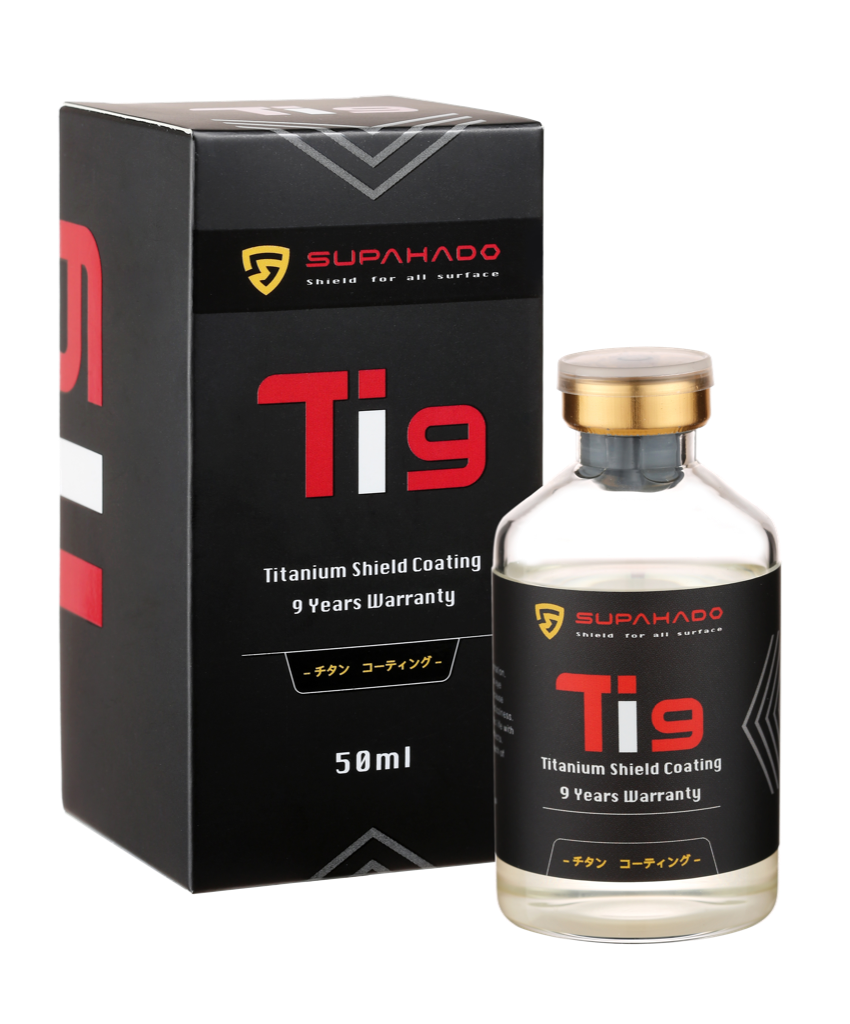 Tiシリーズ 9年保証